


Copy Link


Karsten Simpson, Head of Australia, Fund Management & Investment at Keppel, discusses why Australia is a market of strategic significance, and how Keppel offers differentiated investment opportunities across infrastructure, real estate and connectivity assets.
Q: Keppel has been investing in Australia for over two decades. What are some of the key attractions and opportunities in this market?
Australia is a key market for Keppel’s Asia Pacific focus. The country’s economic growth is strengthening, driven by stronger private consumption and business investment in the non-mining and renewable energy sectors. Australia’s GDP is projected to grow by 2.3% in 2026 and 2027, up from 1.8% in 2025[1].
Importantly, the Australian market is a transparent, well-regulated market with strong institutional participation, which makes it well suited to long-term capital.
Keppel has been investing in the Australian market for over two decades, supported by an established team of investment and asset management professionals based in the country with over 120 years of combined local experience. Today, we manage about S$5.4 billion[2] across a diversified portfolio in Sydney, Melbourne, Brisbane and Perth.
Beyond the existing capital deployed, Keppel’s business in Australia aligns strongly with Keppel’s global structural themes of energy transition, digital infrastructure and AI growth, sustainable urban renewal, and demographic demand in the living and education sectors.
Keppel’s asset manager-operator model enables us to enhance assets actively, from repositioning and decarbonisation to development execution, generating operational alpha beyond underlying market returns.
Q: What differentiates Keppel’s approach in Australia from other asset managers?
In Australia, our track record reflects deep market insight and strong local partnerships. Our on-the-ground team understands the nuances of regulation, planning and market dynamics, enabling disciplined underwriting and decisive execution. This local capability gives investors confidence in our ability to navigate cycles and capture on and off-market opportunities.
A key differentiator is Keppel’s asset manager–operator model, where operating expertise sits alongside capital discipline. Beyond structuring investments, our teams actively enhance asset performance — through repositioning, decarbonisation, operational optimisation and development execution. This hands-on approach enables us to generate operational alpha and create value beyond financial structuring alone.
We can deploy capital through multiple pathways, through private funds and listed vehicles. In Australia, assets are held under Keppel REIT, Keppel DC REIT and Keppel Infrastructure Trust, alongside our flagship private fund series such as Keppel Asia Macro Trends Fund, KSURF and Keppel Education Asset Fund. This breadth enables us to match opportunities with the right capital pools across core, core+ and value-add strategies, with further expansion through Keppel’s private data centre fund series.
Q: Where are you seeing opportunities in real estate today?
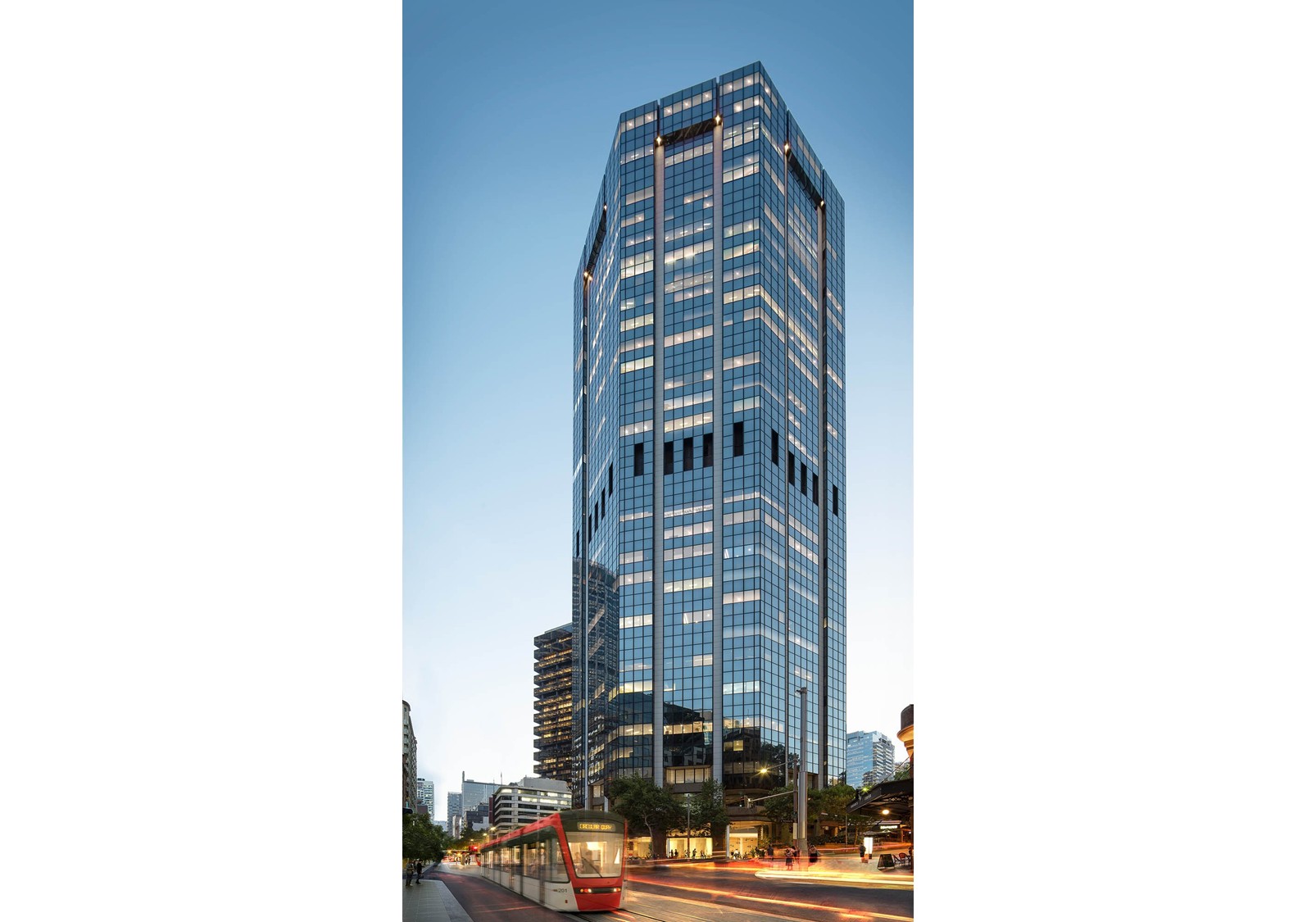
In the office sector, we are exploring opportunities to deploy capital under our sustainable urban renewal (SUR) strategy, with a particular interest in the Eastern Seaboard cities. Currently, market dislocations in notably Sydney and Brisbane are offering potential opportunities for value‑add acquisitions, where we can apply Keppel’s SUR capabilities to transform underperforming assets into high-performing investment properties.
Through SUR, we focus on repositioning and decarbonising assets to enhance both value and sustainability performance.
Beyond the office sector, Keppel sees strong potential in Australia’s retail sector and growing living sector, underpinned by population growth and a structural housing undersupply. This remains an attractive investment segment for us, and we continue to draw on Keppel’s expertise across co-living, student housing and other living subsectors to identify good opportunities.
Q: How do education assets fit into Keppel’s strategy for Australia?
Australia has a strong and globally recognised education sector.
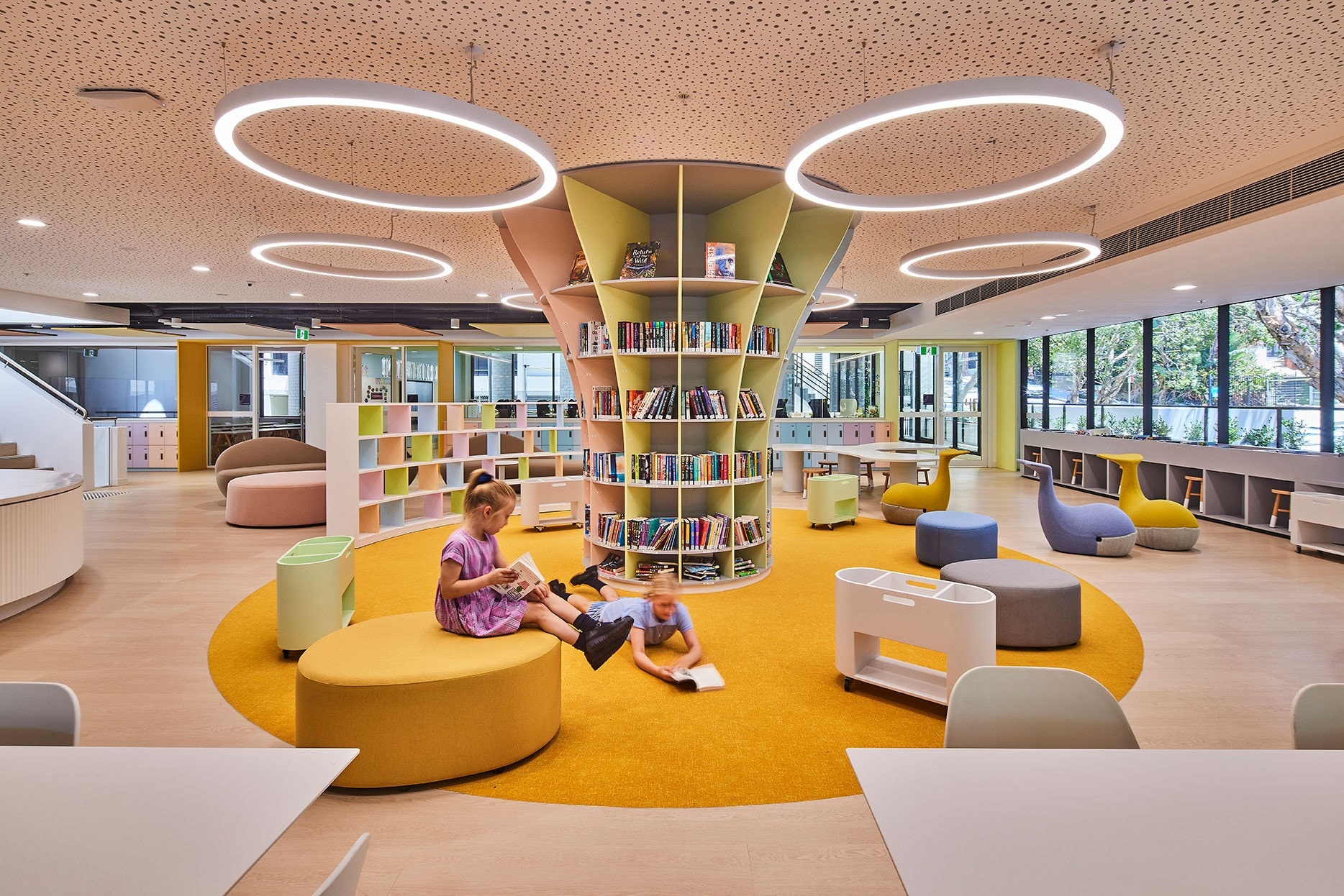
For our inaugural Keppel Education Asset Fund I, we invested in a purpose-built campus in Kensington leased long-term to the University of New South Wales. We have repositioned a commercial building in North Sydney that now houses Reddam House, a K-12 independent school on the Sydney North Shore, part of the global Inspired Education Group.
These assets provide long-duration income streams aligned with demographic demand, and are broadly inflation-protected. We are currently focused on deploying capital for Keppel Education Asset Fund II, supported by a strong deal flow pipeline in Australia.
Q: How is Keppel positioned for infrastructure, particularly energy transition opportunities in the market?
The infrastructure market is poised for significant growth as Australia moves towards a cleaner energy economy. As a global asset manager with deep operating capabilities, Keppel is well placed to offer innovative solutions that support this transition.
Through the Keppel Infrastructure Trust, we have a majority stake in Ventura, Victoria’s largest bus service operator, and Ixom, a supplier and distributor of key water treatment, industrial and specialty chemicals in Australia and New Zealand.
In addition, Keppel Seghers, the environmental technology arm of our Infrastructure operating division, supplied waste-to-energy (WTE) technology and services for Australia's first WTE plant in Kwinana, Western Australia, which has completed commissioning.
Through providing essential solutions and assets, we generate resilient cash flows, while supporting Australia’s sustainability ambitions.
Q: How is Keppel positioned amidst accelerating digital infrastructure demand?
As digitalisation and AI accelerate global compute demand, Keppel is investing upstream to secure early access to critical power, water and fibre infrastructure in key data hubs.
Earlier this year, we secured a 720 MW powerbank[3] for an AI data centre campus near Melbourne, one of Australia’s fastest-growing data centre markets, expanding our powerbank to over 1.0 GW of gross power capacity in the Asia Pacific. Our Connectivity operating division is already in active discussions with hyperscalers and neoclouds regarding the future capacity at this new site near Melbourne. Powerbanking strengthens our proprietary data centre development pipeline, which supports the growth of Keppel’s funds under management, while reducing execution risks.
We will continue to leverage Keppel’s networks and operational expertise to deliver sustainable digital infrastructure solutions as Australia positions itself to become a leading digital economy by 2030.
Q: What will drive investment performance in Australia moving forward?
Australia continues to offer opportunities aligned with long-term structural trends.
Investment performance in Australia will be driven by disciplined execution and operational excellence against structural themes such as energy transition, digital infrastructure and sustainable urban renewal.
Keppel’s asset manager-operator model enables us to enhance assets actively, from repositioning and decarbonisation to development execution, generating operational alpha beyond underlying market returns.
Combined with strong local expertise and disciplined capital allocation, this positions our Australian portfolio to deliver resilient, risk-adjusted outcomes across cycles.
[1] OECD Economic Outlook, Volume 2025 Issue 2, December 2025.
[2] As at end-December 2025.
[3] Powerbank refers to capacity for future data centre development.
