


Copy Link


As urban populations grow and consumption patterns evolve, the challenge of managing municipal solid waste is intensifying. Although traditional landfilling is usually the lowest-cost option, it is becoming increasingly unsustainable due to its negative effects on the environment, public health, and the economy. It leads to greenhouse gas emissions, leachate pollution, and takes up valuable land for extended periods.
Waste-to-energy: A sustainable alternative
Keppel is supporting waste management through advanced waste-to-energy (WTE) solutions. At Keppel NEXT 2025, Jackson Goh, Managing Director, Environment, Infrastructure Division, discussed how Keppel’s proprietary WTE technology is enabling cities to transition from linear “take-make-dispose” models to circular economies that recover resources and reduce environmental impact.
WTE facilities play a critical role in the waste hierarchy, by treating residual waste that cannot be recycled or composted. Through incineration, these facilities can significantly reduce municipal waste volumes by up to 95%, and the heat from incineration can then generate electricity. The residual ash from incineration, which occupies a fraction of the original waste volume, can be further processed for use in construction or land reclamation, while metals can be recovered for reuse or recycling.
“By diverting waste from landfills, we not only reduce greenhouse gas emissions but also extend the lifespan of existing landfill sites,” said Goh. “With further innovation, we can even achieve net-negative carbon outcomes by integrating carbon capture into WTE processes.”
Driving innovation: Efficiency, modularity and digitalisation
Despite its clear benefits, WTE adoption has been limited by its relatively higher cost and complexity compared to landfilling. Keppel is addressing these challenges through continuous innovation across engineering, construction and operations.
An example is the flagship Hong Kong Integrated Waste Management Facility (IWMF), the first in the global WTE industry to be built using a modularisation approach. Major components of the facility were prefabricated offshore and transported to the reclaimed island site, enabling parallel construction with land reclamation, reducing build time and optimising costs and resources. When completed, the Hong Kong IWMF will be capable of treating about 3,000 tonnes of municipal solid waste per day and generate about 480 million kilowatt-hours of green energy per year — enough to power 100,000 homes in Hong Kong, while cutting 0.44 million tonnes of carbon dioxide each year.
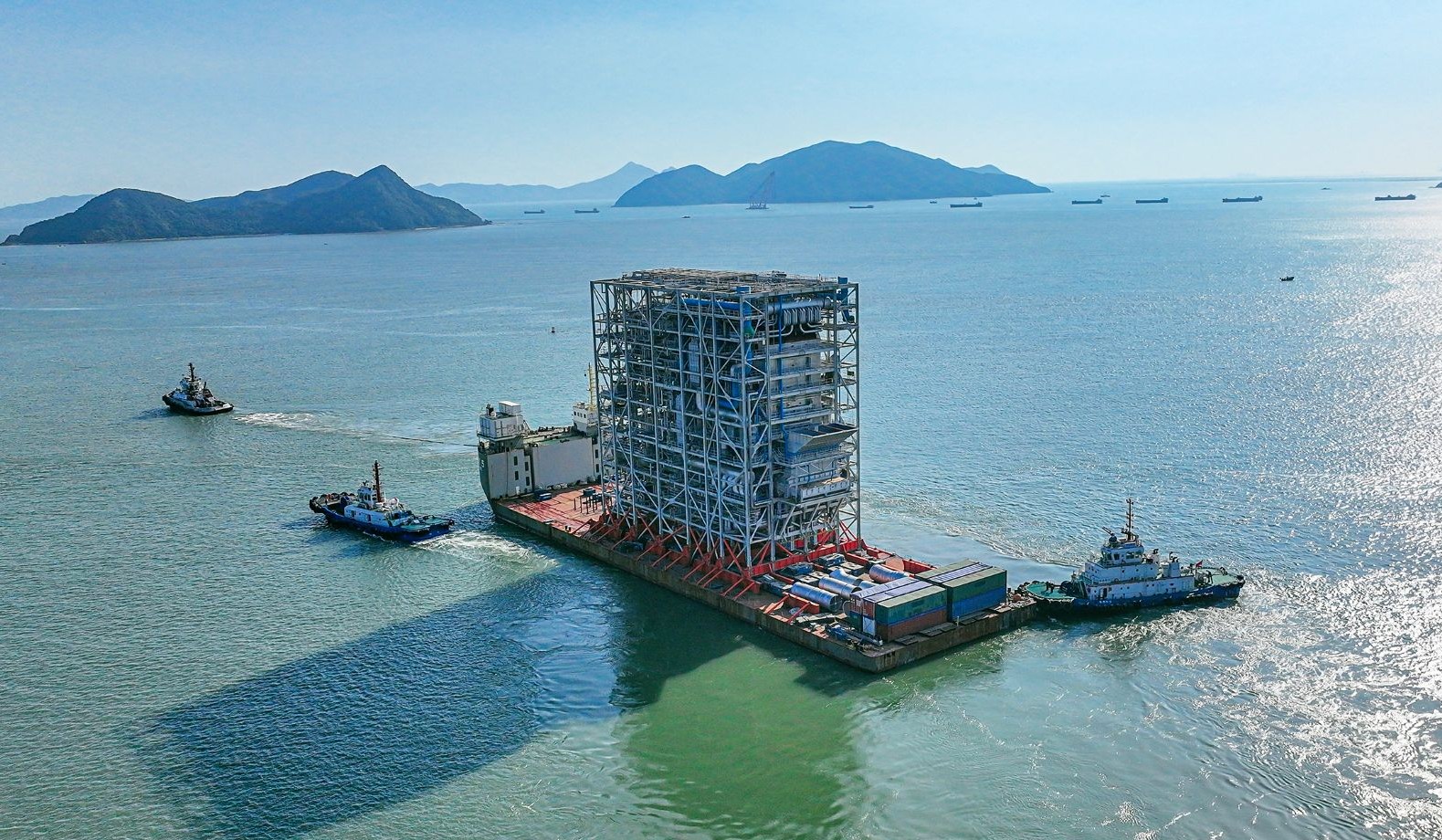 One of 17 prefabricated modules—weighing nearly 6,000 metric tonnes and standing 50 metres tall—enroute to Hong Kong’s IWMF, the industry’s first modularised facility built on an artificial island. The approach enables faster construction, cost savings, and efficient land use.
Keppel’s proprietary WTE technology has been proven to deliver high energy efficiency and environmental performance, meeting stringent international emission standards. The Company leverages in-house engineering expertise to optimise plant performance and applies AI-driven predictive analytics for process optimisation and predictive maintenance, further lowering operating costs and enhancing reliability.
Towards net-negative carbon and greater circularity
Looking ahead, Keppel is exploring the integration of carbon capture and utilisation technologies with WTE plants. By capturing and sequestering carbon dioxide from incineration, WTE facilities can potentially become net-negative carbon solutions, especially given that about half of municipal solid waste is biogenic in origin. This positions Keppel’s WTE solutions as a key enabler for cities and nations seeking to meet decarbonisation targets and circular economy goals.
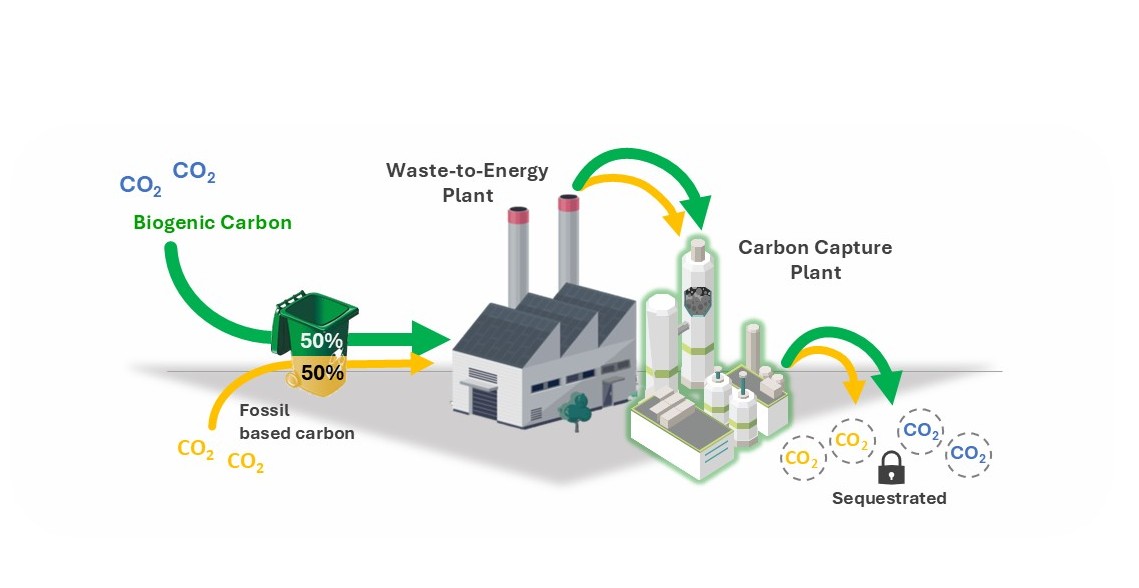 Keppel is exploring the integration of carbon capture with WTE plants, enabling the sequestration of carbon dioxide from incineration for potential net-negative carbon solutions.
As global momentum builds for sustainable waste management, Keppel is committed to advancing WTE technology and operational excellence. By harnessing innovation and digitalisation, Keppel is shaping a cleaner, more sustainable future, delivering enduring value to our investors, customers and communities.
