


Copy Link


As AI and cloud technologies drive global demand for digital infrastructure, Keppel is well placed to capture this growth through its integrated ecosystem of clean energy, data centres, subsea cables and enterprise solutions. At Keppel NEXT 2025, a panel on Keppel’s ecosystem explored how the Company combines diverse capabilities to meet the evolving needs of customers end-to-end, while delivering strong value to its Limited Partners and investors.
Unlocking and powering digital assets
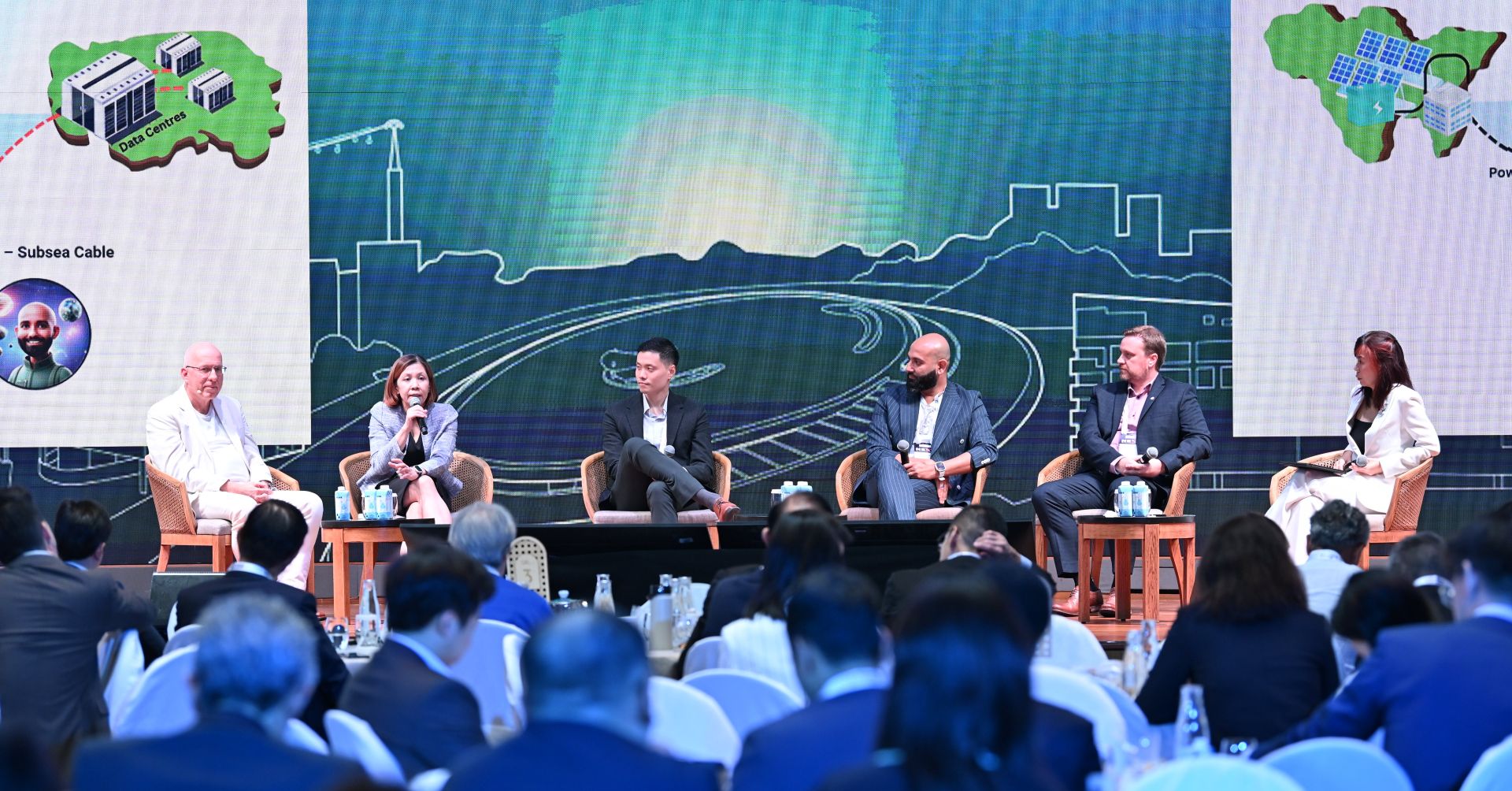 Through the panel discussion, attendees gained insights into how Keppel’s end-to-end digital infrastructure ecosystem sets the Company apart as a preferred partner to global cloud players and technology leaders.
Janice Bong, Managing Director, Power & Renewables at Keppel’s Infrastructure Division, explained how Keppel’s ability to generate and procure sustainable energy in Singapore and the region will play a crucial role in enabling digital infrastructure. “Access to reliable and sustainable power is of paramount importance and regional power importation will be crucial to enabling digital infrastructure. Keppel is going to build a large-scale 300MW project to provide sustainable, round-the-clock energy to Singapore. This large-scale energy project involves installing at least 2GWp of solar PV, 4GWh of battery energy storage systems and the necessary subsea power cables to provide reliable green power for data centres to power up.”
Describing the immense power requirements of next-generation data centres, Ooi Kai Yong, Keppel’s Head of Technical Solutions, Data Centres, said, “The power density per rack that goes into our data centres - we house thousands of such servers - ranges from 5 to 15 kilowatts per rack. Looking ahead, we are designing AI data centres that can support advanced GPUs, which will increase the power density to between 100 and 200 kilowatts per rack.” Ooi added that future GPU architecture could potentially drive power requirements to above 500 kilowatts per rack, or as much as 100 times the minimum density of current installations.
Keppel is a forerunner in pursuing the development of new energy vectors including hydrogen-ready combined cycle gas turbines, ammonia for power generation and carbon capture solutions that can support greener data centre operations. This includes Singapore’s first hydrogen-compatible power plant, the Keppel Sakra Cogen Plant, set to be operational in the first half of 2026. Keppel is also the country’s first importer of renewable energy under the Lao PDR-Thailand-Malaysia-Singapore Power Integration Project, which the Company can leverage to help unlock new data centre capacity.
Designing and deploying efficient data centres
In planning modern data centres, multiple factors from efficient design to strategic location must be carefully considered, given their sizeable power and water requirements.
Ooi explained, “On top of redesigning data centres for greater efficiency, we also have to strategise how we deploy them. Conventional cloud data centres are very latency sensitive, so we often have to locate them near city centres. In contrast, AI training data centres are less latency sensitive, but they have other requirements such as fast speed to market and access to a large amount of power. Despite these differences, one thing remains constant - data centres need to be highly connected, just like the nodes in the global network.”
To create better connectivity and alleviate the typical land, water and energy constraints of traditional data centres, Keppel is pioneering the development of Singapore’s first floating data centre. Capable of connecting directly to submarine cables, the project has completed its Environmental Impact Assessment and is pending the issuance of the construction permit by the Singapore authorities.
Connecting continents and countries
Subsea cable systems, the critical infrastructure behind global digital communication, is another central element of Keppel’s ecosystem. The Bifrost Cable System, which recently achieved Ready-for-Service status on 1 October 2025, is the world’s first state-of-the-art subsea cable that connects Singapore directly to the west coast of USA via Indonesia through the Java Sea and Celebes Sea. Co-developed by Keppel together with its joint build partners, the Bifrost Cable System spans more than 20,000 kilometres and provides one of the fastest data routes across the Pacific.
With the Bifrost Cable Landing Station located in one of Keppel’s data centres, the Company’s data centre customers can experience direct benefits such as improved latency and faster connections. Keppel and its private fund co-investors own five out of a total of 12 fibre pairs in the Bifrost Cable System.
Emad Bakhshy, Senior Vice President, Commercial, Data Centres, Keppel, said, “Speed, for certain customers, is worth a premium. With the ability to land cables directly into our own data centres - this is how we bring in connectivity for the customers and house them all within our ecosystem. The world is now more connected through subsea cables, but it needs more diversification in terms of routes. At Keppel, we are exploring new cable projects to enhance global connectivity and resilience.”
As an extension of Keppel’s digital infrastructure strategy, Keppel Infrastructure Fund and the Singapore-listed Keppel Infrastructure Trust, are jointly investing in Global Marine Group (GMG), one of the world’s largest independent subsea cable solutions providers. GMG operates a fleet of vessels providing maintenance and installation services to the global subsea cable network and will contribute towards the installation and maintenance of Keppel’s future cable system projects in Southeast Asia, Asia and beyond.
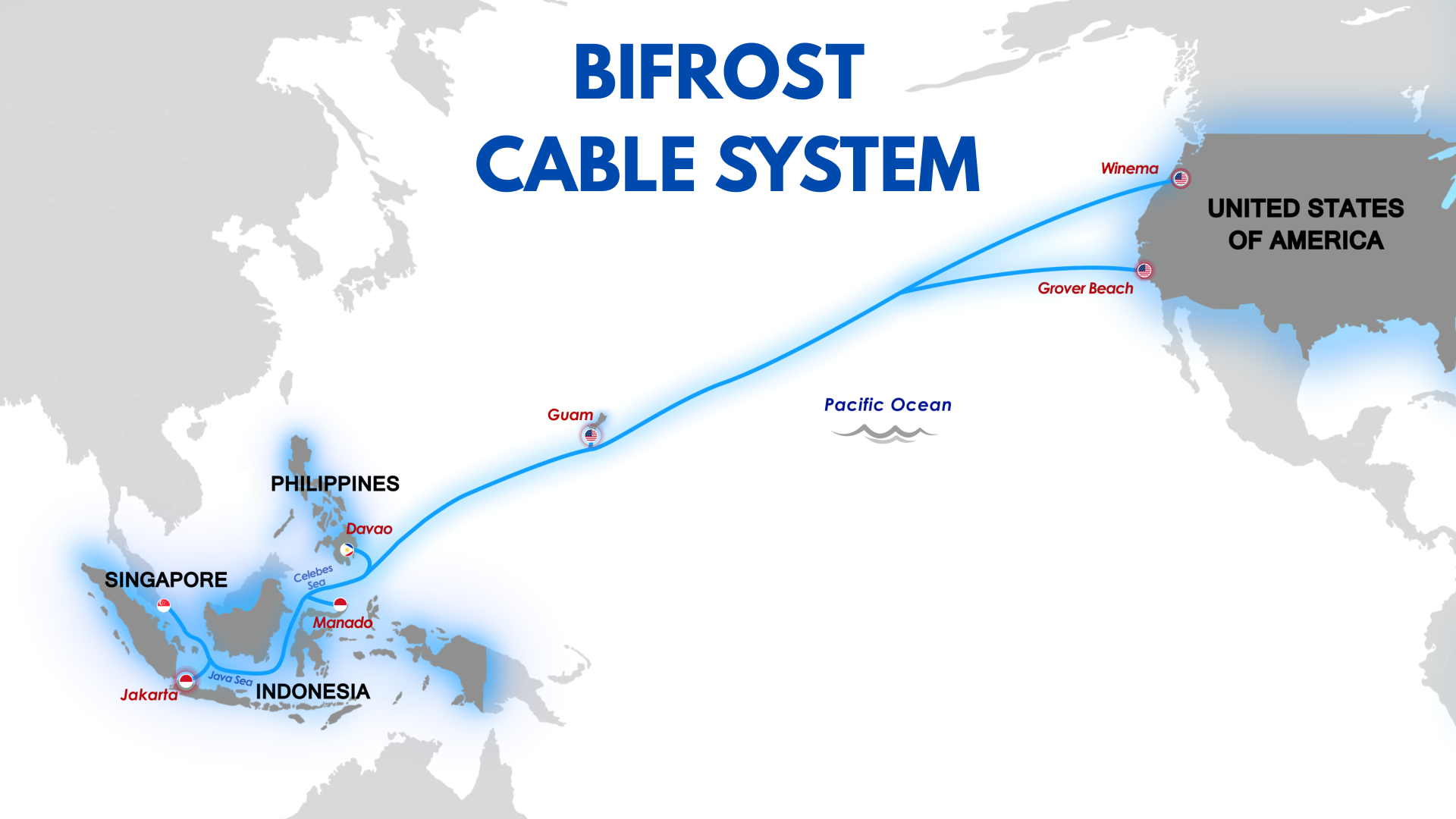 The Bifrost Cable System is the world’s first subsea cable system directly linking Singapore to the west coast of USA via Indonesia through the Java Sea and Celebes Sea.
Driving digital transformation
With offerings that include hybrid cloud solutions, multi-cloud, managed networks and infrastructure, Keppel’s Information and Communications Technology services business, AsiaPac, works closely with enterprises in Singapore, Malaysia and Vietnam to support their digitalisation and IT transformation needs. Together with Keppel’s data centre business, these services enable customers to access seamless end-to-end connectivity and IT solutions across the value chain.
As the demand for digital infrastructure accelerates, Keppel’s integrated ecosystem and multi-disciplinary expertise enable it to create the connectivity solutions that customers need, as well as offer attractive investment opportunities with strong returns to its Limited Partners and investors.
